Field guide
How to build a decentralized local food commons
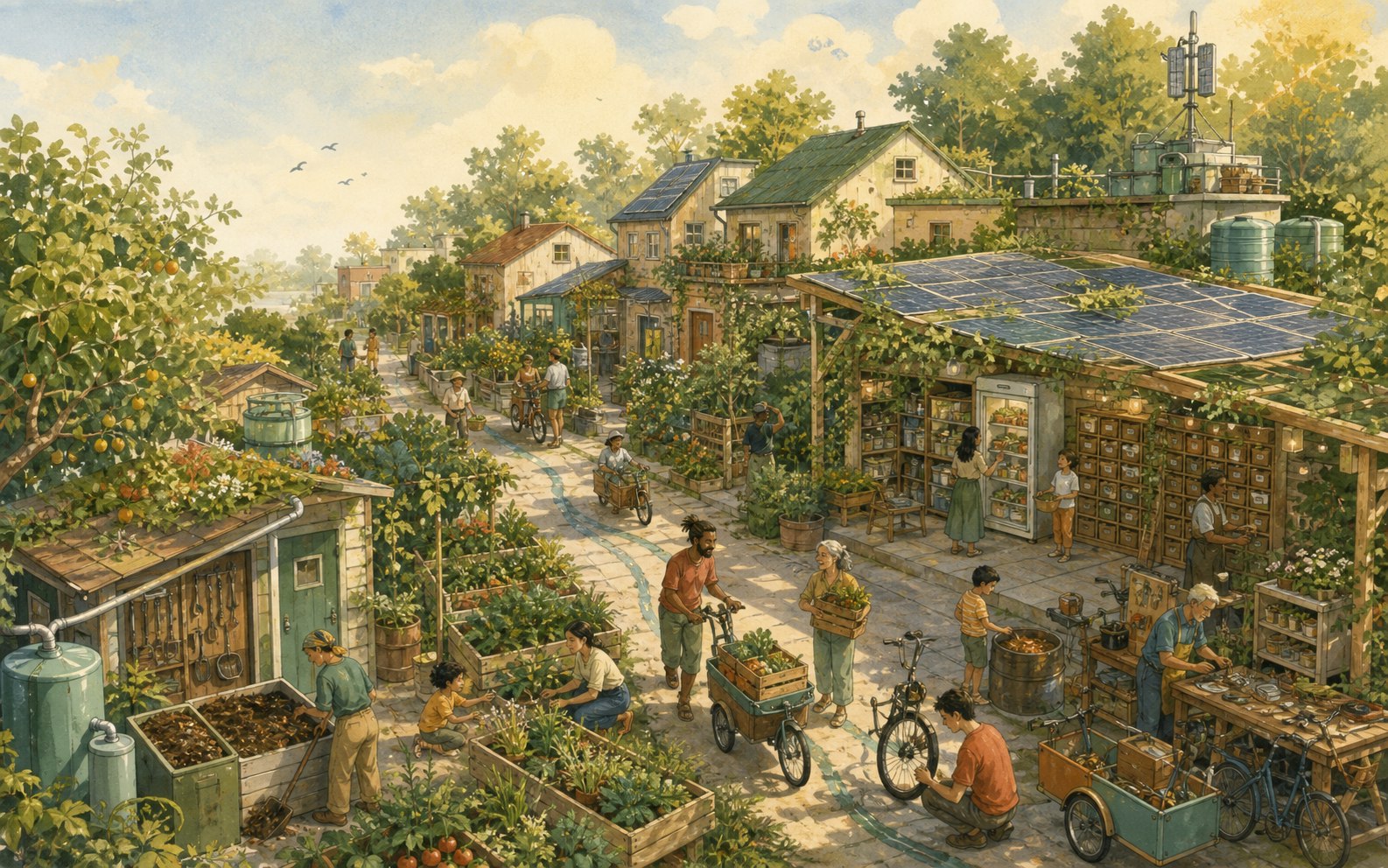
Start with a garden, but design for the whole neighborhood: food, seed, water, tools, repair capacity, clean energy, communication, and shared knowledge that no single platform has to own.
Open plannerThe garden is the first node
A productive garden can supply more than vegetables. It can produce seed, compost knowledge, microclimate observations, pollinator habitat, teaching capacity, and seasonal surplus. A commons begins when that capacity is visible and can be matched to a concrete local need.
Map functions, not institutions
- Food nodes
- Gardens, kitchens, community fridges, compost sites, and safe surplus pickup points.
- Material nodes
- Tool libraries, repair benches, reuse depots, open workshops, and responsible recycling paths.
- Ecological nodes
- Water capture, seed libraries, habitat corridors, soil-building sites, and nurseries.
- Infrastructure nodes
- Solar charging, energy monitoring, bicycles and trailers, mesh relays, and local digital archives.
Use a small exchange protocol
Every useful exchange can begin with five fields: offer or need, resource type, specific detail, local node, and time window. Keep the protocol compact enough for a paper board, a text message, or a low-bandwidth radio packet. Close the loop only when a person confirms the exchange happened.
Prevent pollution before counting recycling
The strongest material loop avoids pollution at the source: refuse an unnecessary input, share an existing durable item, maintain and repair it, find a safe second use, then recycle responsibly when those options are exhausted. The ledger should count verified actions instead of inventing carbon savings it cannot substantiate.
About this field guide
A local-first garden agent and neighborhood commons planner for food, water, tools, repair, clean energy, and resilient communication. Your profile and garden history stay on this device.