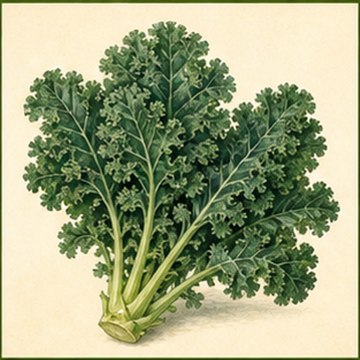
Field guide
How to grow kale: planting, care, and harvest guide
Kale typically reaches first harvest in 50–70 days. This guide covers when to plant by USDA zone, common pests, harvest cues, and companion plants where relevant.
Open plannerWhen to plant kale by USDA zone group
- USDA Zones 1–4 — April to May
- USDA Zones 5–6 — March to May
- USDA Zones 7–8 — February to April
- USDA Zones 9–10 — January to March
- USDA Zones 11–13 — October to February
Companion plants
Good companions: Beets, Celery, herbs
Avoid planting with: Strawberries, Tomato (Cherry), Tomato (Slicing), Tomato (Paste/Roma)
Harvest
When to pick
- Leaves are about the size of your hand
- Lower leaves are mature and deep green
- Flavor sweetens after a light frost
How: Pick lower/outer leaves first, leaving the top growing point. Never harvest more than 1/3 of the plant at once.
Storage: Remove stems, store leaves in a sealed bag with a paper towel. Lasts 1-2 weeks in the fridge.
Common pests and problems
Cabbage Worms
Signs: Irregular holes in leaves, green caterpillars, small white butterflies nearby
Control: Hand-pick caterpillars. Apply Bt (Bacillus thuringiensis) spray. Use floating row covers to prevent egg-laying.
Aphids
Signs: Clusters on leaf undersides, curling leaves
Control: Strong water spray, insecticidal soap, or neem oil. Plant nasturtiums nearby as a trap crop.
Flea Beetles
Signs: Tiny round holes ("shotgun" pattern) in leaves, small jumping beetles
Control: Floating row covers. Neem oil or kaolin clay spray. Interplant with radishes as a trap crop.
About this field guide
A local-first garden agent and neighborhood commons planner for food, water, tools, repair, clean energy, and resilient communication. Your profile and garden history stay on this device.