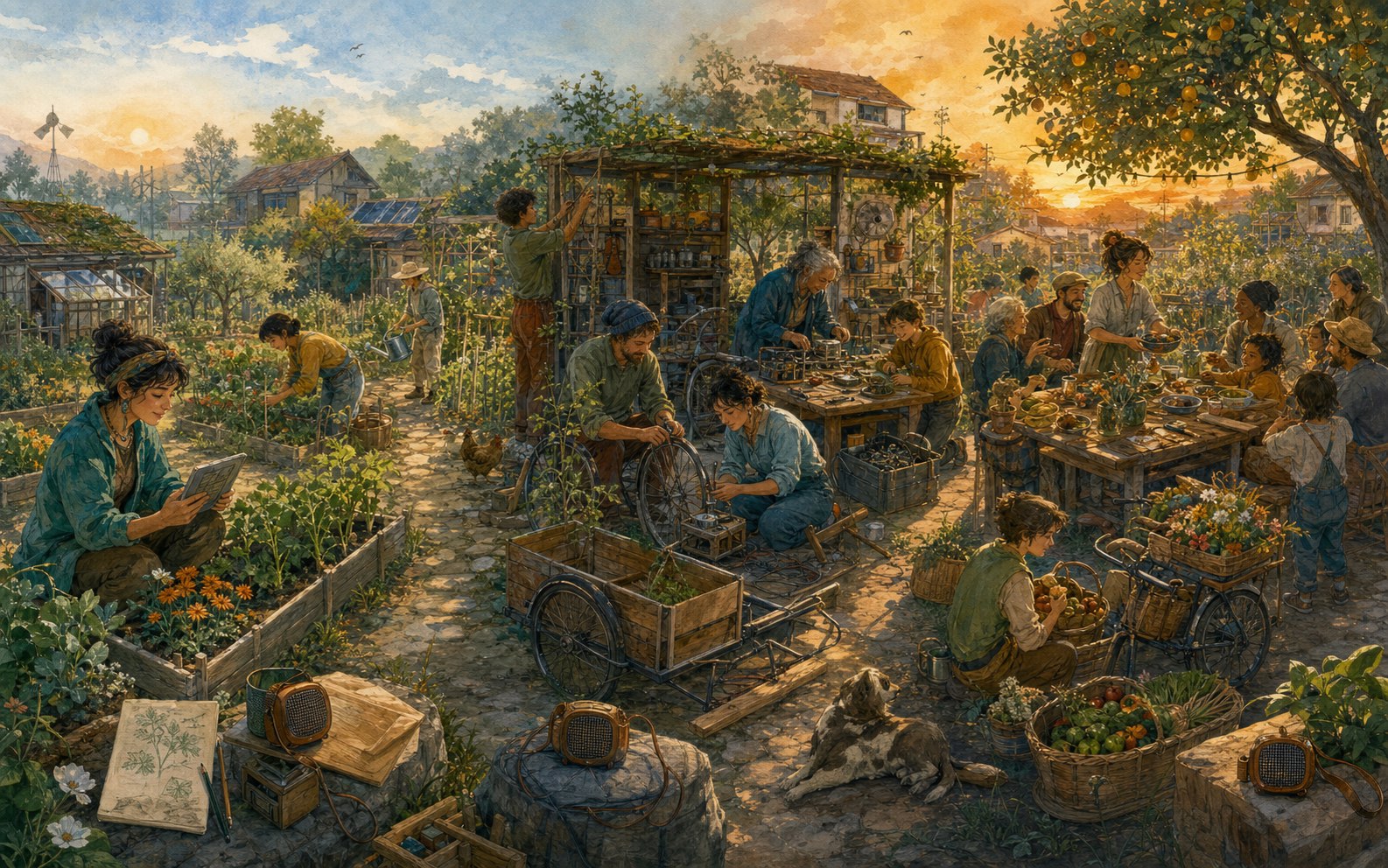
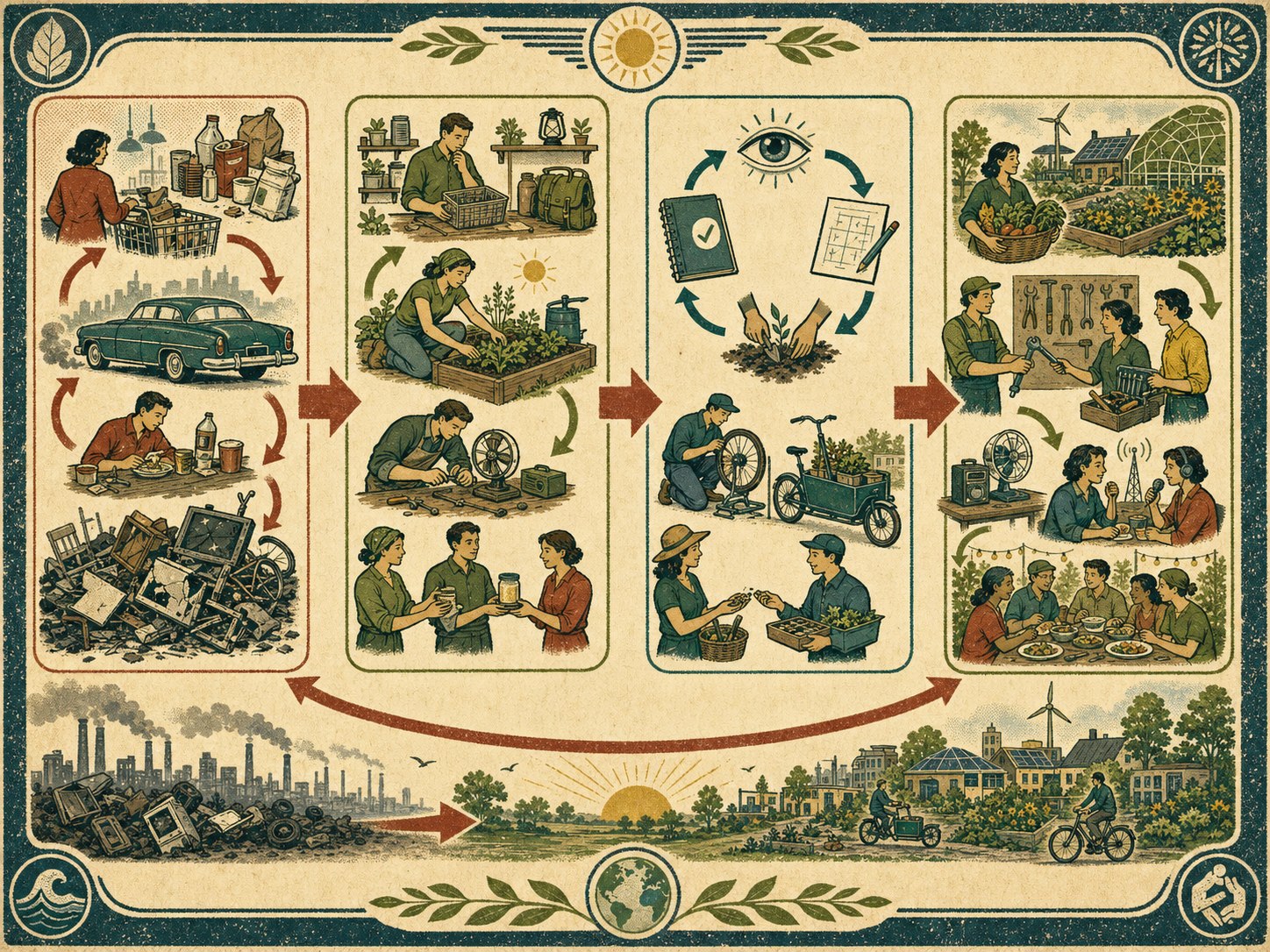
A visual blueprint for a solarpunk house, block, and daily life
Solarpunk is not a coating of plants on expensive technology. It is the deliberate redesign of everyday systems around repair, ecological limits, local knowledge, shared abundance, and human control. These three illustrated destinations work backward from that future.
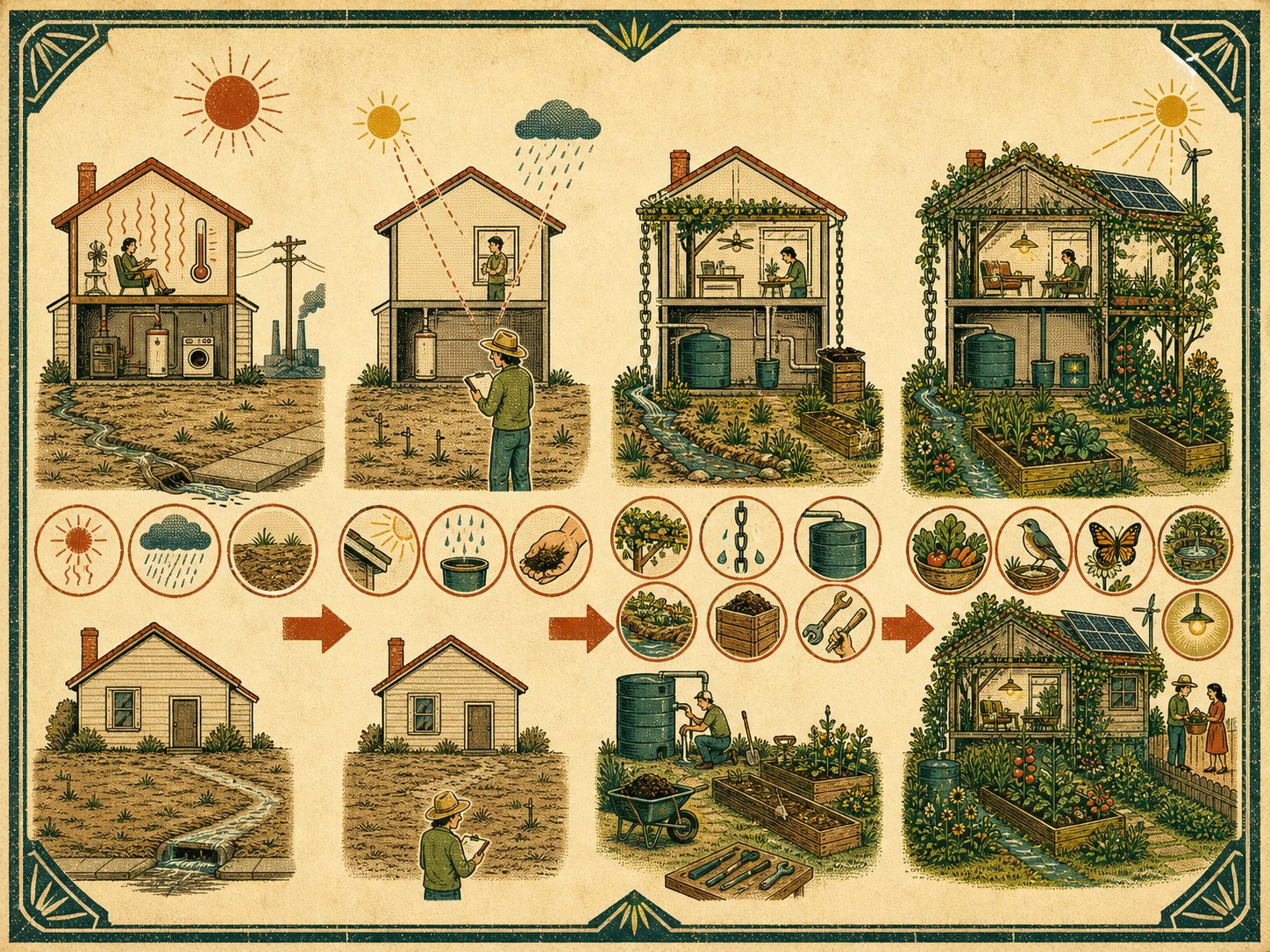
Observe sun, runoff, heat, soil, existing plants, and what can be repaired before buying equipment.
Add shade, rain capture, soil-building, and edible perennials before complex automation.
Measure useful outcomes such as gallons captured, food shared, tools repaired, and habitat added.
Connect one surplus or skill to a nearby household so the home becomes a useful neighborhood node.
2. Connect a food commons block
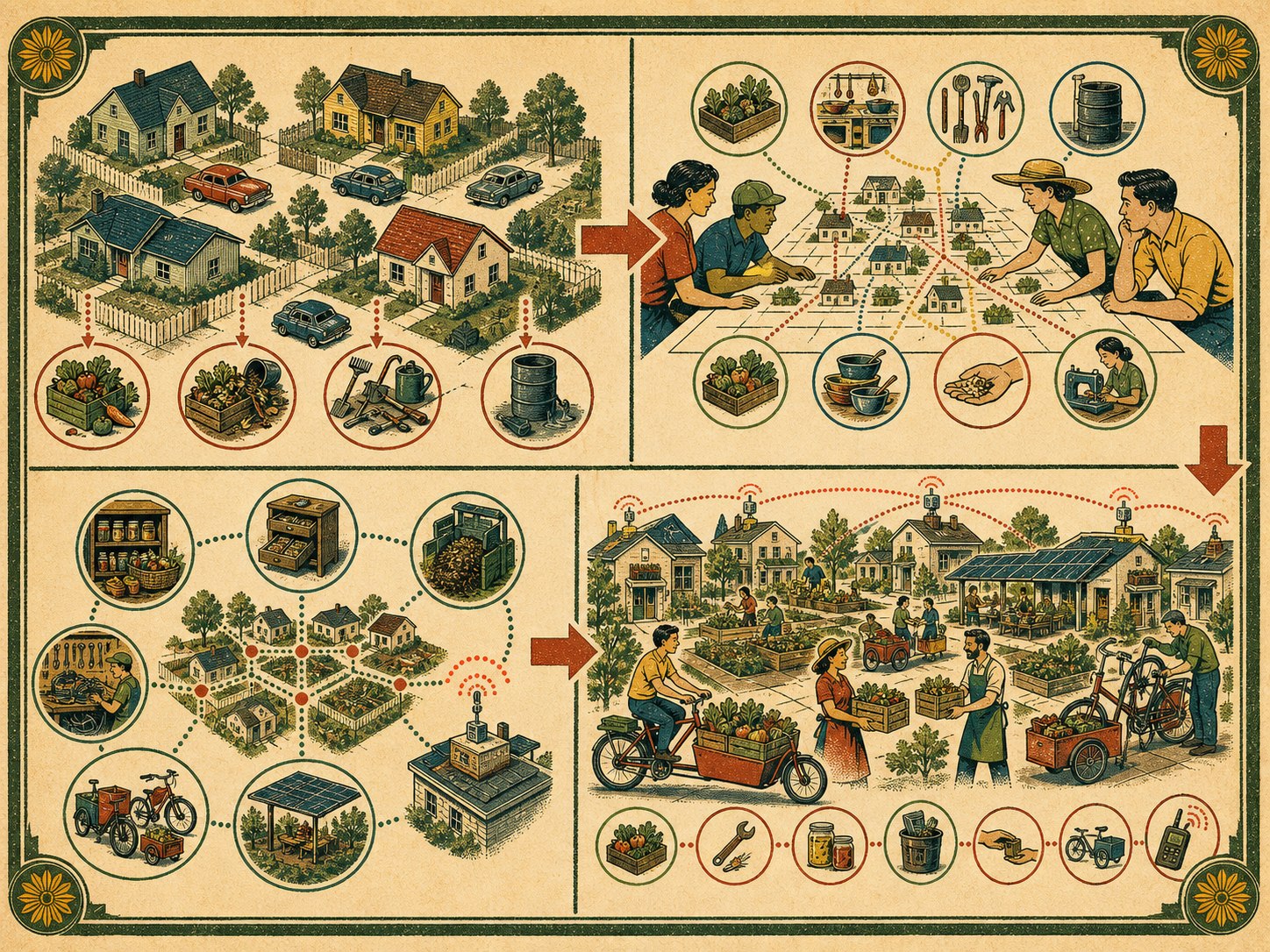
Map real capacity: gardens, kitchens, cool storage, tools, water, power, repair skills, and trusted gathering places.
Publish specific offers and needs through a paper board or local-first app before introducing new infrastructure.
Place many small nodes where people already gather instead of building one controlling platform.
Use human relays first, then compact peer-to-peer LoRa messages where distance or outages justify radio.
3. Make a commons lifestyle ordinary
Replace isolated consumption with recurring routines for observation, maintenance, growing, and sharing.
Treat repair knowledge, seed memory, and trustworthy local records as infrastructure.
Let a bounded agent remember timing and sequence work while people approve actions and verify outcomes.
Reduce pollution at the source by needing fewer disposable products, trips, inputs, and centralized services.
The implementation order matters
Start with observation, relationships, and source reduction. Add passive physical systems next, local software after the practice exists, and low-power radio only when it solves a real communication gap. The Garden Steward follows that order: local context, bounded missions, human action, verification, and shared learning.
About this field guide
A local-first garden agent and neighborhood commons planner for food, water, tools, repair, clean energy, and resilient communication. Your profile and garden history stay on this device.